
A Smart First Step on Solar for Dunwoody’s City Facilities
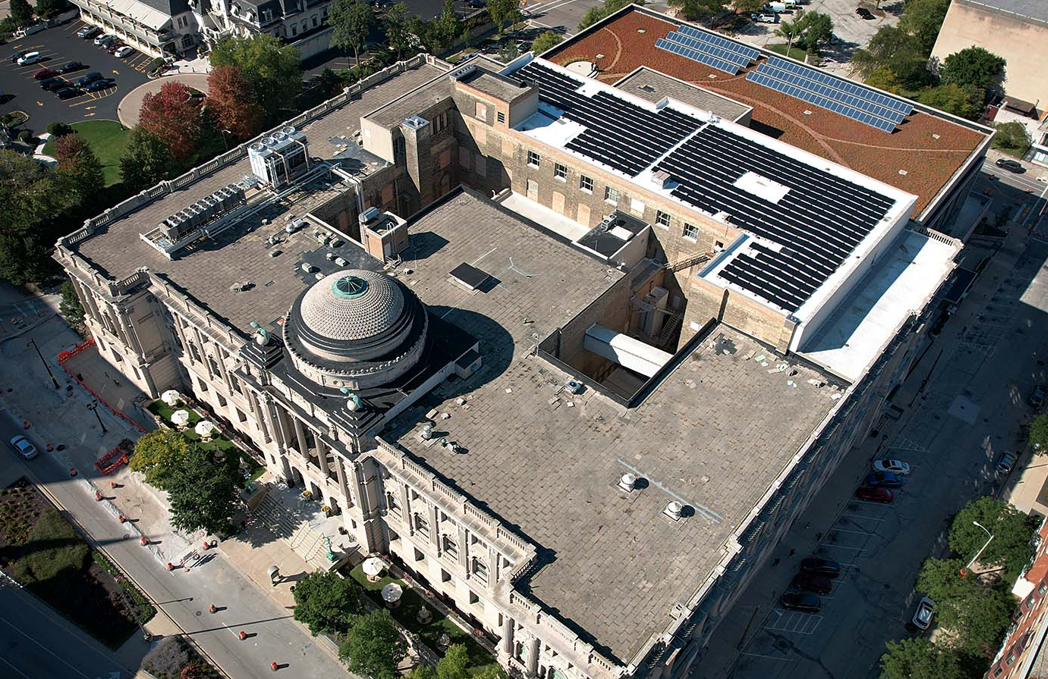
Example of rooftop solar on a municipal facility (City of Milwaukee Central Library)
Photo credit: Eagle Point Solar
Last night, City Council took an important step forward by advancing a rooftop solar initiative for two city facilities — the Dunwoody Cultural Arts Center and the North Shallowford Annex. This was presented as a discussion item, with a vote to move forward anticipated at our next Council meeting on April 27.
This proposal delivers real, measurable benefits. It is expected to generate approximately $11,000 in savings in the first year, with meaningful savings projected over time, while reducing reliance on traditional energy sources.
Environmentally, it will lower greenhouse gas emissions, reduce demand on the electric grid during peak periods, and increase the use of clean, renewable energy in our operations. It also strengthens long-term resilience by diversifying how the City generates and manages energy.
This is being implemented through a no upfront cost model, allowing the City to realize savings without capital investment, while the vendor, Sunpath Solar handles installation, maintenance, and performance.
This effort reflects a true collaborative process. I want to thank City staff, our Sustainability Committee, and especially Councilmember Rob Price for helping move this forward. A special thank you to current and former Sustainability Committee members Anne Hicks (Chair), Larry Heiman (Vice Chair), and Nathan Sparks (Former Chair) for their leadership. Committee members played a key role in working with staff on the RFP and vendor selection.
Earlier last year, I spoke with industry experts and reviewed how peer cities like Roswell, Tucker, Atlanta, and Savannah are implementing solar on municipal buildings. It’s encouraging to see those ideas now taking shape here in Dunwoody.
This initiative aligns with the City’s adopted Sustainability Plan, which calls for improving resource efficiency, reducing environmental impact, and evaluating solar opportunities as part of our long-term strategy.
This is a starting point. I look forward to exploring additional opportunities across the city — including other facilities, future projects, and options like covered parking — to build on this momentum.
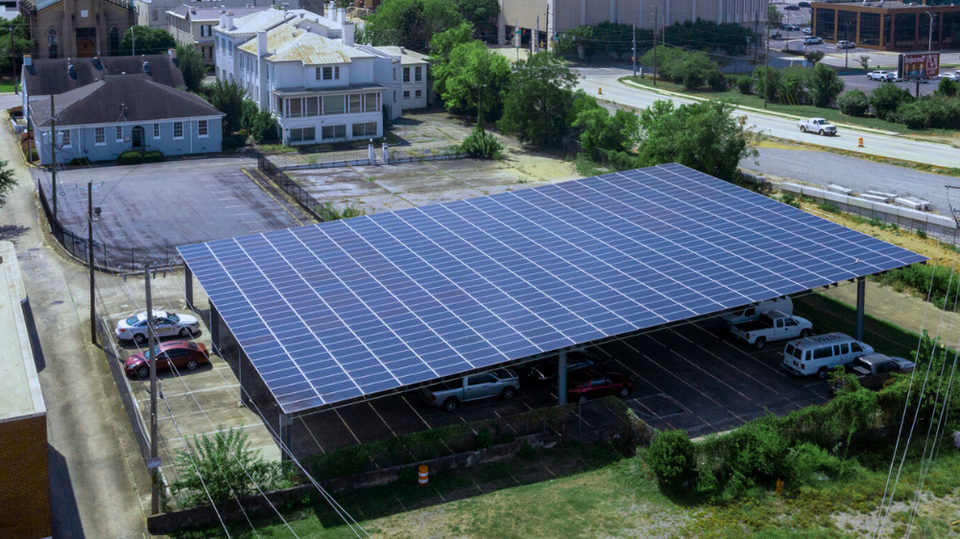
Solar canopy installation at the Macon, Georgia Sheriff’s Office — an example of how cities can generate clean energy while maximizing existing parking areas
Photo credit: The Macon Telegraph
By taking steps like this, we are not only reducing costs and emissions today, but also building a more resilient city — better prepared for power disruptions, less exposed to energy price volatility, and more capable of sustaining essential services when it matters most..