
Preparing for Dunwoody’s 2026 Strategic Retreat
Each year, the Mayor, City Council, and senior staff hold a strategic planning retreat to step back from our regular meeting schedule and talk about the bigger picture — where Dunwoody is today, where we are going, and how we make sure we are using taxpayer dollars wisely to get there.
From my time as an Army officer and later working on complex projects in the private sector, I experienced firsthand — and was taught — that good leadership requires periodically stepping back from daily decisions to look at the overall mission. Success depends on clear priorities, the right resources, and the discipline to follow through. That same mindset is what our annual retreat is meant to support.
These retreats are not about making final decisions.
They are about setting direction, asking the right questions, and making sure we stay focused on the work that matters most to our community.
As we prepare for this year’s retreat, there are several themes I believe are important for us to discuss openly and honestly.
The City Council’s Strategic Planning Retreat will take place on March 25, 2026, beginning at 8:00 AM at the Le Meridien Hotel in Dunwoody. The retreat is open to the public, and residents are welcome to attend. Details and agenda are posted here.
Staying Focused on Execution
Over the past several years, the City has adopted strong long-range plans, including the Comprehensive Plan, the Parks Master Plan, the Transportation Plan, and the Sustainability Plan.
These plans reflect what residents have told us they want — safe streets, quality parks, strong public safety, responsible financial management, and a high quality of life.
In many areas, we have made good progress carrying out those plans. At the same time, our execution has not always been as consistent as it should be, especially when projects involve multiple partners, private property, or long-term redevelopment efforts.
A good example is the continued goal of revitalizing areas such as Dunwoody Village. In recent years, the City adopted a new master plan for the area, updated zoning to support that vision, and brought in outside expertise to help identify practical next steps. Those efforts gave us a clear direction, but the real challenge is making sure the recommended actions continue to move forward over time.
Projects like this require ongoing attention, clear project management, and regular reporting so that elected officials, staff, and the public all understand what progress is being made. When initiatives involve multiple organizations — such as the City, the Development Authority, and private property owners — it becomes even more important to have defined responsibilities, consistent updates, and a way to track how we are doing compared to the plan.
If we want to see steady progress, we need to make sure our boards, staff, and elected officials are aligned on priorities, expectations, and responsibilities, and that the organizations we rely on for economic development have the guidance, capacity, and resources needed to carry out their responsibilities.
Execution requires more than having good ideas.
It requires structure, accountability, and sustained focus over time.
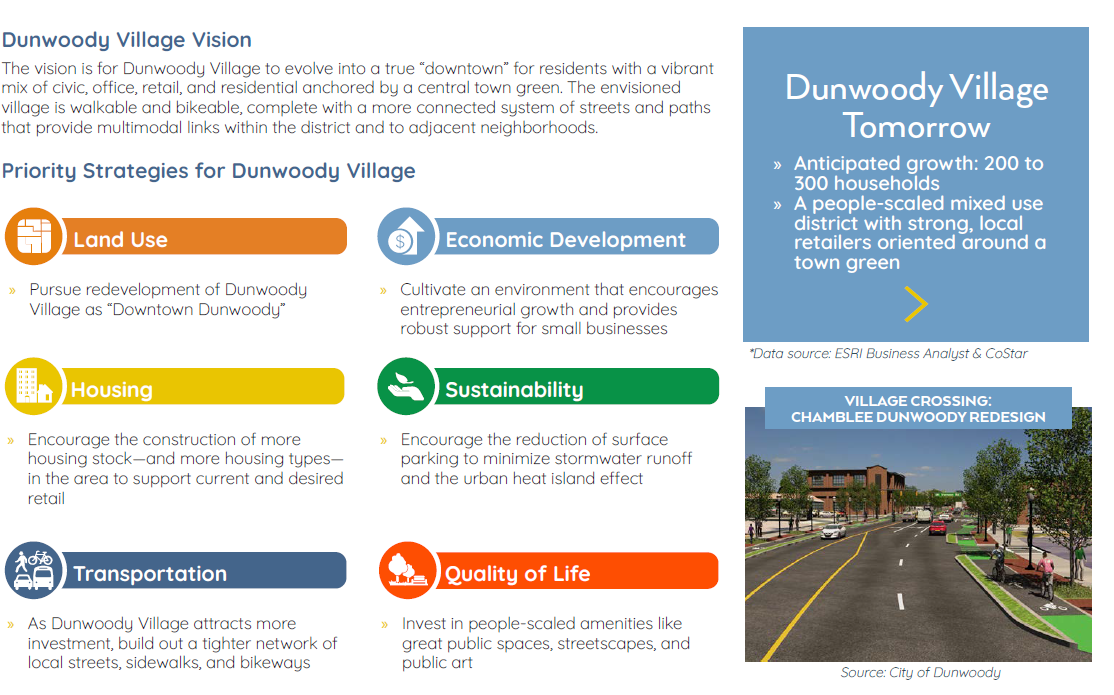
Graphic of the Dunwoody Village vision from the 2025 Comprehensive Plan showing the adopted vision and priority strategies.
Maintaining a Continuous Plan–Execute–Evaluate Cycle
One idea I believe is important for us to keep in mind is that good governance should follow a continuous cycle — plan, execute, and evaluate.
We develop plans to set direction.
We execute those plans through budgets, projects, and daily work.
Then we evaluate how well we are doing and whether the results match what we intended to accomplish.
That evaluation step is just as important as planning. It requires us to ask honest questions:
Are we making progress on the priorities we adopted?
Are projects being completed on time and within budget?
Do we have the staff and resources needed to carry out what we have approved?
Are there areas where we need to adjust course?
This kind of feedback loop should not happen only once a year at a retreat.
It should be part of an ongoing process throughout the year, with workshops and regular check-ins that allow the Council and staff to stay aligned on priorities and performance.
Strong organizations — whether in the military, the private sector, or local government — work best when planning, execution, and evaluation are happening continuously.
Balancing Vision and Execution
In my professional career working on large systems and organizational planning, one of the common ways to evaluate performance is to look at two things at the same time — how clear the vision is, and how well the organization is able to carry it out.
The strongest organizations are those that combine long-term planning with the ability to consistently deliver results. Having good ideas is not enough, and focusing only on day-to-day work without a clear direction is not enough either. Success comes from keeping both in balance.
As we continue these discussions, I think that is a useful way to think about where we are today and where we want to be in the future.
Making Sure We Have the Financial Capacity for the Future
Dunwoody has built a strong reputation for being fiscally responsible, and that discipline has served our community well. Our finance team does an excellent job forecasting revenues and managing the budget conservatively, which has helped keep the City on solid financial footing even during uncertain economic periods.
At the same time, expectations continue to grow. Residents want high-quality parks, safe streets, responsive public safety, and well-maintained infrastructure. All of those things require both capital investment and ongoing operating costs.
A separate discussion focused specifically on finances and long-term budgeting is planned for later this year, after the legislative session concludes and we have a clearer picture of revenue and economic conditions. That conversation will be important as we begin preparing the next annual budget and reviewing our multi-year financial outlook.
Each year, the City adopts not only an operating budget, but also a five-year Capital Improvement Program. This plan prioritizes major investments in roads, sidewalks, parks, public safety equipment, facilities, and other long-term needs. Because these projects often take years to plan and complete, it is essential that we review the Capital Improvement Program regularly to make sure it stays aligned with our strategic goals.
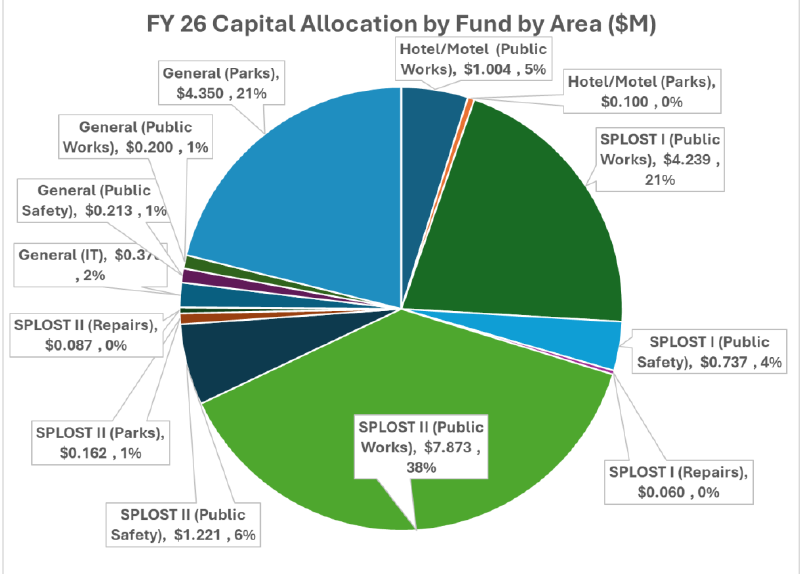
Example from the City’s Capital Improvement Program showing how funding is allocated across major project areas.
Strong execution depends on strong financial planning.
Making sure our priorities, our budget, and our long-term capital plans all work together should remain a key part of our ongoing discussions throughout the year.
Building a More Connected Community
One of the most consistent priorities I hear from residents is the desire for a more connected city — not just by roads, but by sidewalks, trails, parks, and local destinations that people can reach without always getting in a car.
Investments in transportation options that support walking, biking, and other forms of human-powered mobility help people of all ages move around safely and stay active. When we talk about safer streets, we are not only talking about crime, but also about designing our roads so that drivers, pedestrians, cyclists, and families can all share them safely and comfortably.
An important part of this vision is creating safe routes to school. I believe we should continue working toward a city where every child can safely walk or ride a bike to school on a regular basis throughout the year. When our streets are designed to be safe and comfortable for children, they are safer and more convenient for everyone — including seniors, families, and drivers.
Just as importantly, these kinds of investments create more opportunities for people to interact face-to-face. In a time when so much of our communication happens online and people can easily feel isolated, it matters when neighbors can be outside their cars, walking through a park, riding a bike, or simply crossing the street and greeting one another. Even small moments — a smile, a wave, a short conversation — help strengthen the sense of community that makes Dunwoody special.
Early in my career, one of my mentors in community planning shared an idea that has stayed with me: you build a city for the people who live there. In other words, the most important investments are not the ones meant to attract attention from far away, but the ones that make everyday life better for the people who call Dunwoody home.
That philosophy is one reason I place such a high priority on expanding our trail network, improving sidewalks, and creating more public green space and gathering places in our local commercial centers. When people have safe, welcoming places to walk, meet, relax, and spend time together, it strengthens both the sense of community and the long-term value of the city itself.
Continuing to make progress in these areas requires long-term planning, steady funding, and the ability to execute projects efficiently.
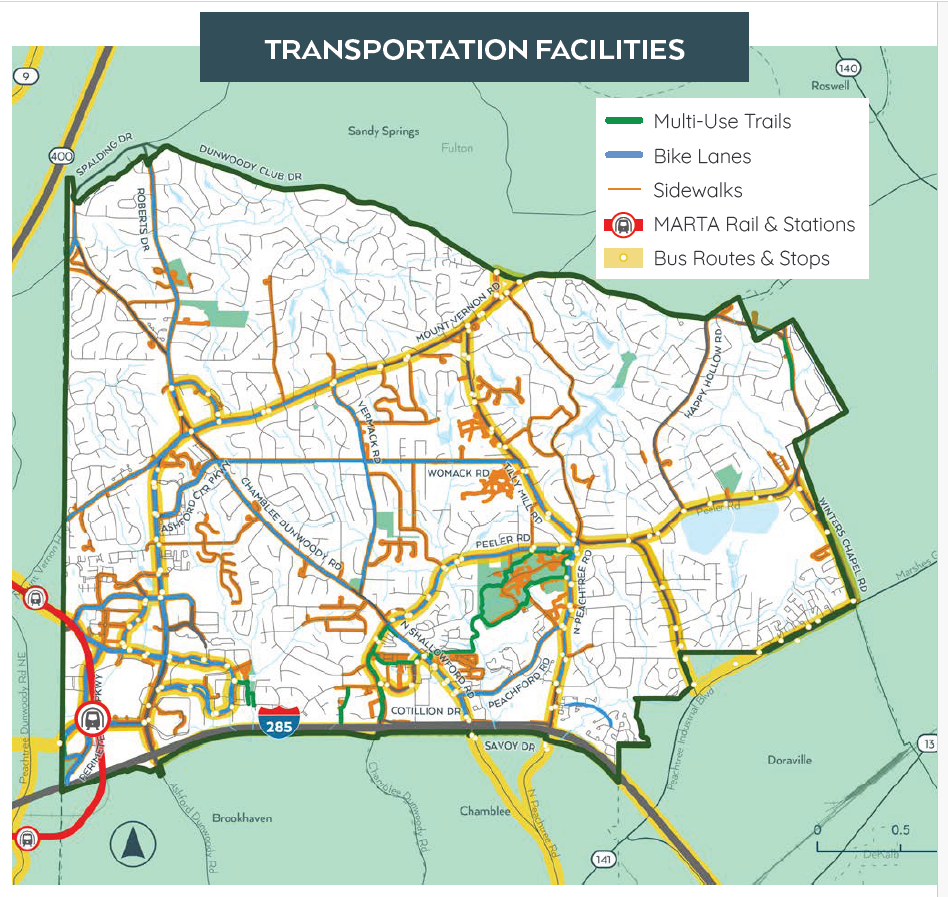
Map showing existing and planned transportation facilities, including sidewalks, trails, bike lanes, and transit connections.
Matching Plans with People
Another important part of execution is making sure our staffing levels match the plans we adopt.
Over the years, the City has taken a careful and incremental approach to adding staff, creating new positions only when there is a clear need and when residents and businesses have asked for additional focus in certain areas. Examples include strengthening our economic development efforts, adding professional expertise such as an arborist, creating the Assistant City Manager role to support operations, and expanding programs like our Police Ambassador initiative to improve community engagement.
This approach reflects the balance we should continue to maintain — not growing government for its own sake, but making sure we have the capacity to carry out the priorities the community expects.
If we want to implement transportation improvements, park projects, redevelopment efforts, safety initiatives, and community programs, we need the organizational capacity to manage that work effectively.
Having clear priorities also helps ensure that staff time and taxpayer dollars are focused on the projects that matter most.
Monitoring Progress and Staying Transparent
One area we should continue improving is how we monitor and communicate progress on major initiatives. Too often, updates on long-term projects only come when an item appears on a meeting agenda, even though the work itself continues throughout the year. For complex efforts such as redevelopment, infrastructure planning, or economic development, it would be helpful to have clearer and more consistent ways to see where things stand compared to the plan.
Having defined project lists, timelines, and visible status updates — whether through regular reports, workshops, or public dashboards — can help both elected officials and residents understand what is moving forward and what still needs attention. This kind of transparency does not mean getting involved in day-to-day staff work. It simply means making sure everyone can see how the plans we have adopted are being carried out.
We have done this well in the past. With the use of federal relief funds during COVID, the City maintained clear public reporting on how those dollars were allocated and spent. That level of visibility helped build trust and kept everyone aligned on priorities.
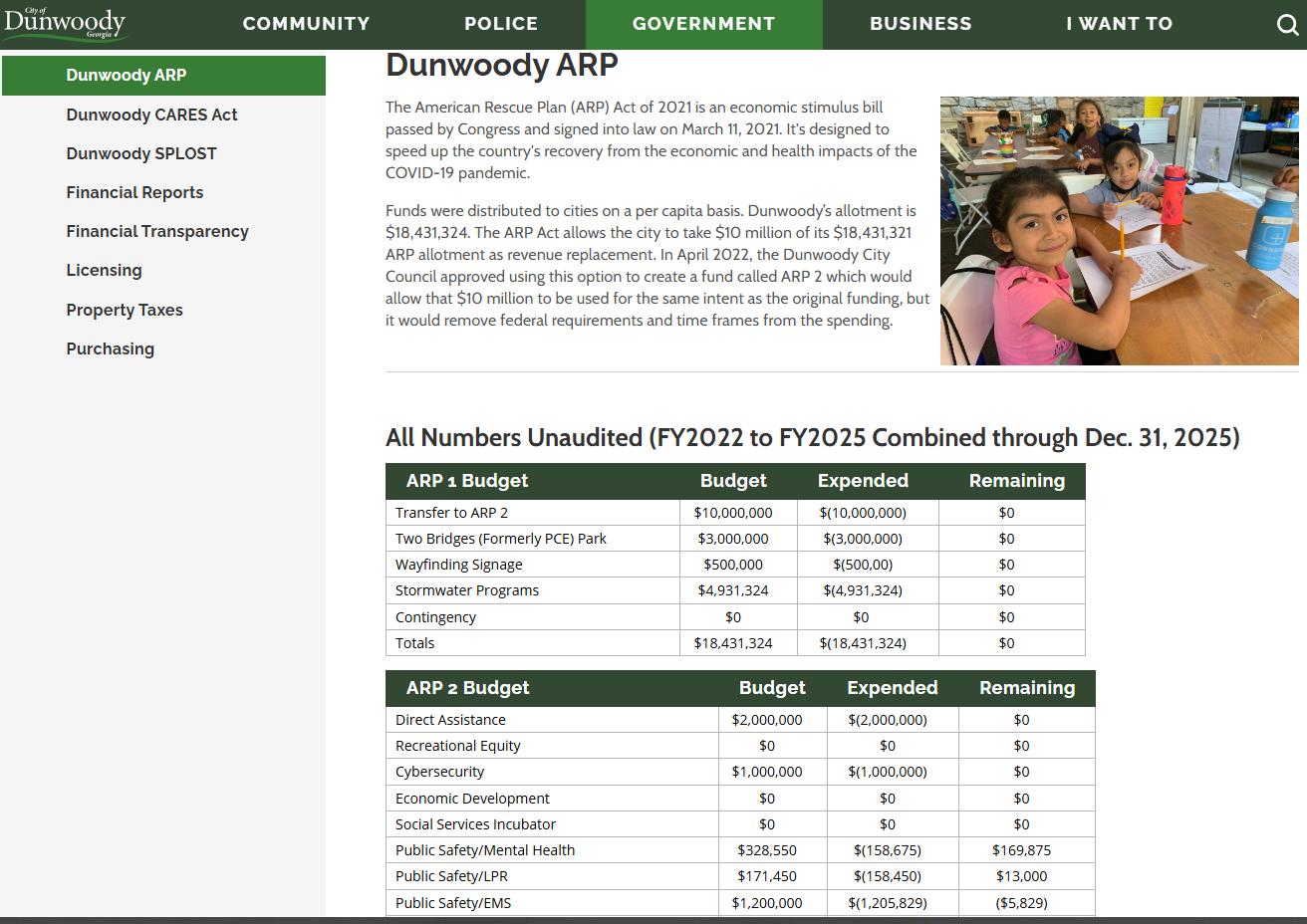
Example of the public reporting used during the ARPA program, showing how projects, budgets, and spending were tracked online.
We also see good examples of this approach in our ongoing infrastructure programs. The Public Works Department maintains project pages that show the status of major efforts as they move from concept to design, to construction, and finally to completion. The same kind of visibility exists for programs such as paving plans, sidewalk projects, and other capital improvements, where residents can easily see what has been completed and what is planned next.
Applying that same level of clear, ongoing reporting to major initiatives across the organization would help ensure that our plans continue moving forward after they are adopted.
Using Workshops for Better Decisions
Complex issues often require more discussion than we can have during regular Council meetings.
One goal I have for the coming year is for us to make greater use of workshops for major topics. Workshops allow us to look at issues in more detail, hear from staff and residents, and think through the long-term impact of decisions before votes are taken.
This approach improves transparency, leads to better decisions, and helps keep the Council focused on execution instead of reacting to issues one meeting at a time.
Looking Ahead
Dunwoody is in a strong position.
We have engaged residents, a solid financial foundation, and clear plans for the future.
The purpose of the retreat is to make sure we stay focused on execution, remain financially responsible, and continue investing in the things that make Dunwoody a great place to live.
I look forward to the discussion, and I welcome input from residents as we prepare for the year ahead and continue working to make sure Dunwoody remains a community built for the people who call it home.
As always, I am available to meet with residents to listen to ideas and concerns, whether one-on-one or in small group settings. Hearing directly from the people who live and work in Dunwoody is one of the most important parts of serving on City Council.